Is NOVA free to use?
+
Yes. NOVA is free and open under CC BY-NC-ND 4.0. No account, no payment, no installation. Open NOVA and start designing immediately.
Where do my projects get saved?
+
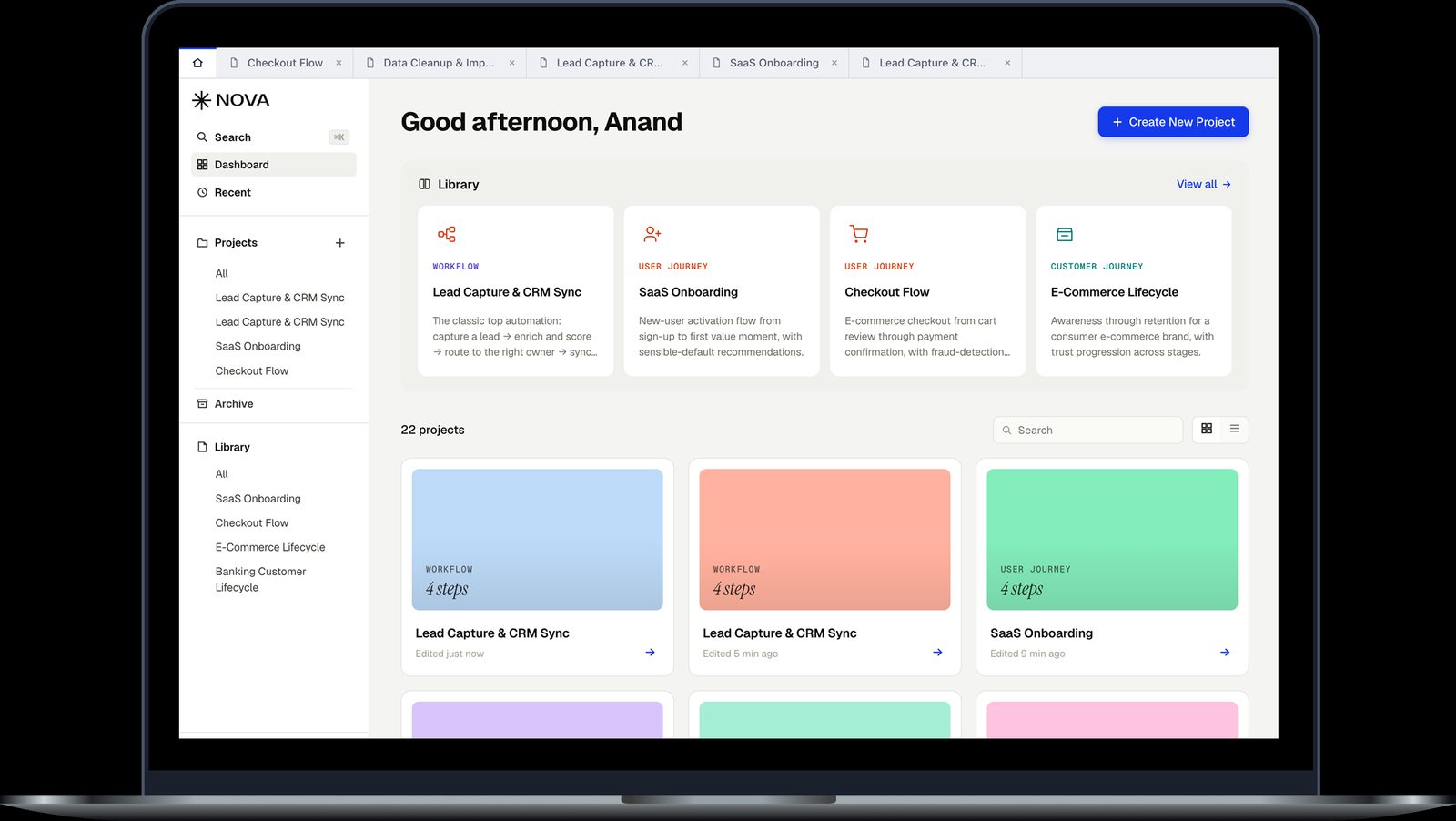
Projects save to your browser's localStorage and are never uploaded — no analytics, no tracking. Signing in sets a Cloudflare session cookie, but your work itself never leaves your machine. The downside: clearing your browser data deletes them, and projects don't sync across devices. Export to Markdown to keep a copy outside the browser.
Why Markdown export instead of JSON or PDF?
+
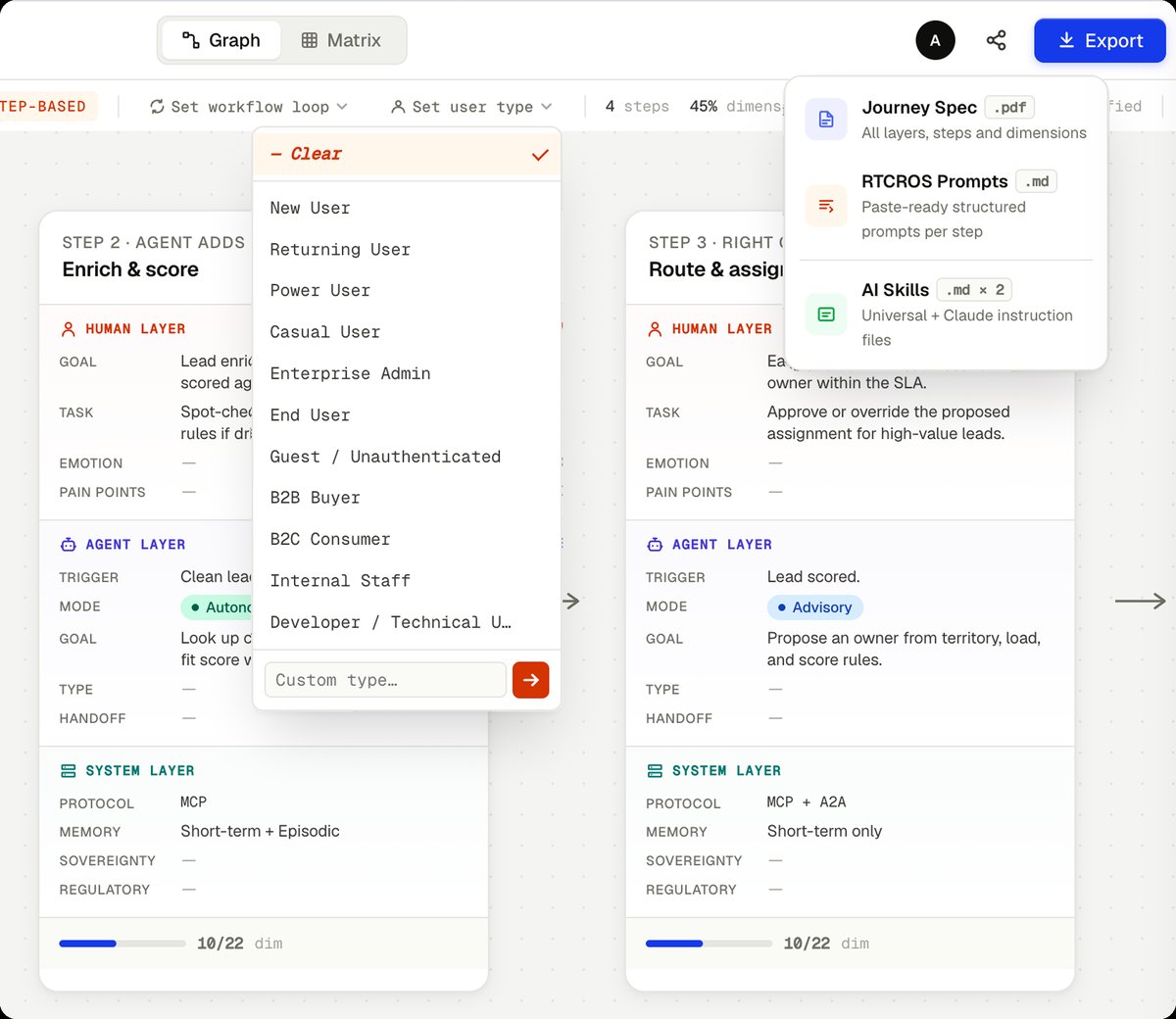
Markdown is the most portable structured format that's also human-readable. The exported `.md` file opens in Notion, Obsidian, GitHub, VS Code, or any plain text editor. It's easy to version-control, easy to diff, easy to share, and easy to convert to PDF, HTML, or anything else if needed.
What's the difference between User Journey and Customer Journey mode?
+
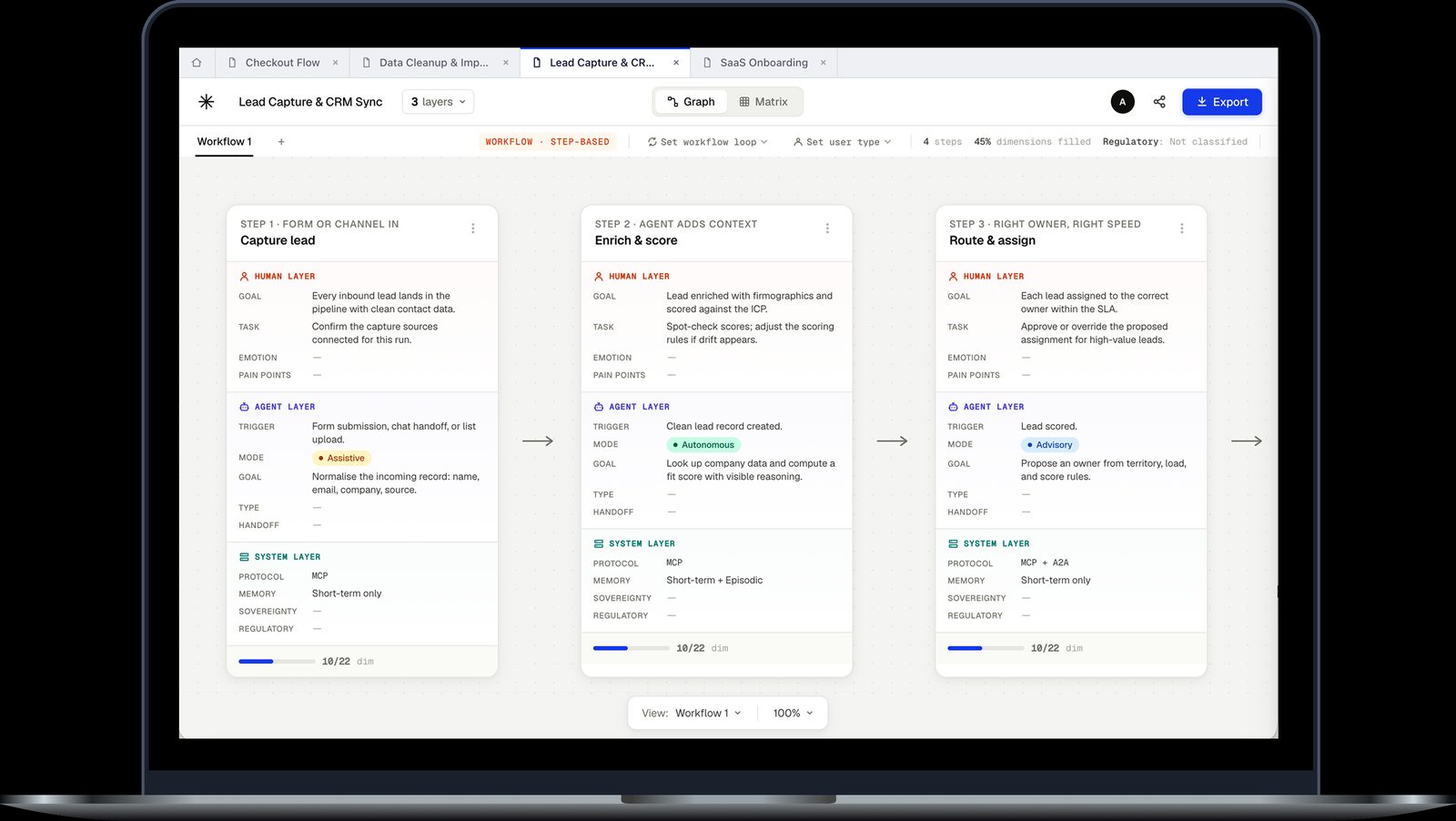
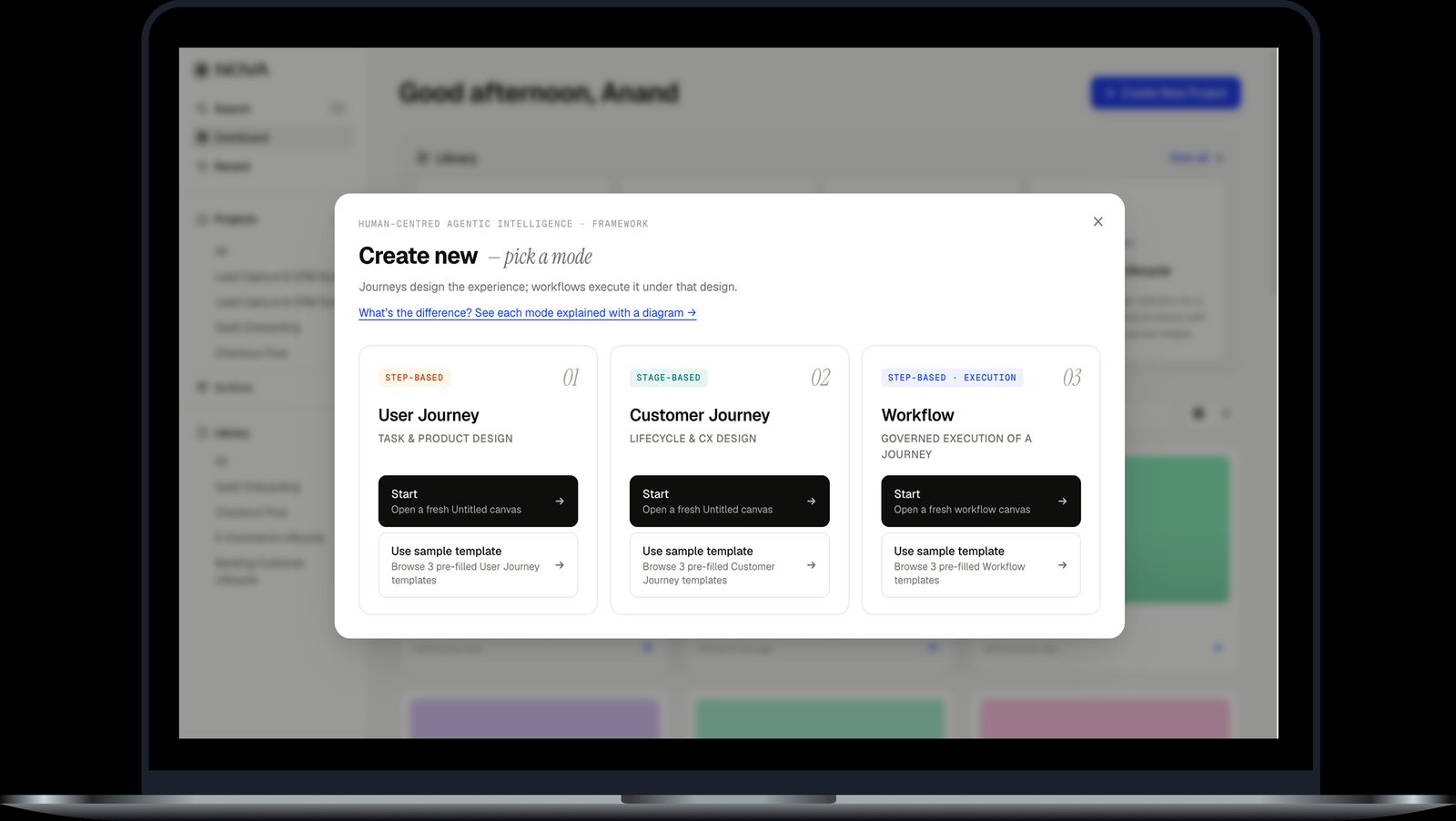
User Journey is step-based — a sequence of discrete tasks inside a product (sign up, configure, use). Failure scope is localised, time horizon is minutes to hours. Customer Journey is stage-based — phases of a long relationship (awareness, consideration, retention). Failure scope is strategic, time horizon is days to months. The same three layers (Human, Agent, System) apply in both modes.
Can I share a project with collaborators?
+
Not yet — there's no real-time collaboration in this prototype. The recommended workflow is to export to Markdown and share the file (e.g. via Notion, Google Drive, GitHub). Each collaborator can import the values back into their own NOVA session if they want to edit.
Does NOVA actually run agents or call MCP servers?
+
No. NOVA is a design tool, not a runtime. The dropdowns for MCP, A2A, agent modes, etc. document your intended architecture — they don't execute it. Use NOVA to specify, then build the agents in your platform of choice (Claude Agent SDK, LangGraph, CrewAI, Vertex AI Agent Builder, etc.).
Can I use NOVA's output for EU AI Act compliance documentation?
+
The Markdown export includes EU AI Act risk classifications per step and is structured for traceability — useful as design-time documentation under Articles 9, 13, and 14. It's not a substitute for a full conformity assessment, but it's a strong starting point for the documentation that high-risk systems require.
Can I customise NOVA or extend the framework?
+
The HAI framework is licensed under CC BY-NC-ND 4.0, which permits sharing with attribution but not commercial use or derivative works without permission. Reach out to the author if you want to adapt the framework for your organisation's specific context.